09.12.2025
The German School of Journalism's #DuKannstJournalismus workshop aims to get young people excited about journalism.

Contact person
Gabriele Blömker
02501 801-1670
gabriele.bloemker@lv.de
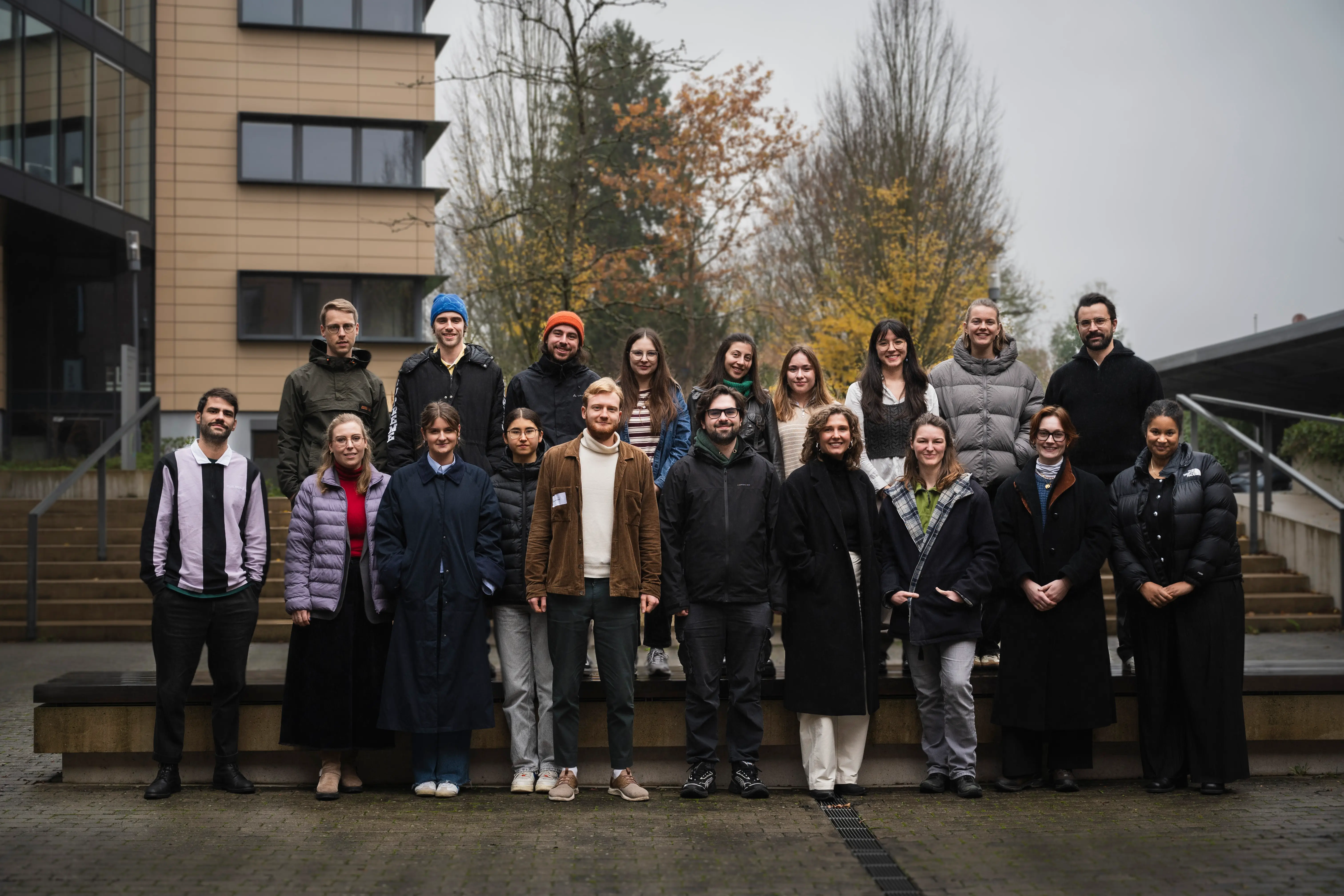
In November 2025, the German School of Journalism in Münster held a workshop from the #DuKannstJournlismus series, which aimed to introduce young people from rural areas to the profession of journalism.
Image source: Shane Thomas McMillan
In mid-November, 15 young people in Münster learned about everyday journalism and journalism training. Sponsored by the Landwirtschaftsverlag Foundation, the German Journalism School (DJS) organised a two-day workshop as part of its ‘#DuKannstJournalismus’ format. The aim of the series is to inspire people from different backgrounds, origins and regions to pursue a career in journalism.
On the first day of the workshop, participants had to go out onto the street and find a story themselves. Workshop participant Johannes Stiefel, for example, met barber Ali Chaer from aka ‘ali.friseurr’, who told him about his work in the salon. The conversation was difficult at first, ‘but the longer you talk, the deeper and more interesting the story becomes,’ Johannes Stiefel reports from his experience. ‘Now I can imagine the work of a journalist much better,’ adds workshop colleague Julia Macke.
In addition to the specific work, Eva Piepenbrock and Julian Osthues, both editors at Landwirtschaftsverlag Münster, presented the daily work routine in an agricultural editorial office, provided insights into the organisational structure of a media company, and guided the workshop participants through it. Malte Schwerdtfeger, Chairman of the Landwirtschaftsverlag Foundation, presented the work of the foundation.
On the second day of the workshop, former DJS students shared their experiences of entering journalism and simulated an entrance examination situation. Specifically, workshop participants received answers to questions such as: What does the admission process at the German School of Journalism look like? How does the oral entrance examination work? What questions are asked in the written examination? How can I determine whether I am suitable for this job? Where can I apply after completing my training? DJS graduate Alisa Schellenberg, who now works at DIE ZEIT, encouraged participants to take the first steps and start with an internship, for example.
'During the workshop, I discovered that there are many ways to get into journalism. I find that very interesting, so the workshop was very helpful for me,‘ says participant Julia Macke, delighted with her new experiences. She found out about the workshop through an article by Julian Osthues in the Wochenblatt für Landwirtschaft und Landleben (Weekly Journal for Agriculture and Rural Life) and applied to take part.
’I think the DJS's #DuKannstJournalismus project is very important. Credible, reliable, differentiated and socially relevant quality journalism works best when journalists also reflect the diversity of our society in terms of their backgrounds. This workshop was specifically aimed at people from rural areas. That's why we were very happy to support the DJS workshop on behalf of the foundation,' says Malte Schwerdtfeger.
About the Münster Agricultural Publishing Foundation
The Landwirtschaftsverlag Münster Foundation supports projects in the fields of science, education, art and culture related to agriculture and rural areas. This also includes activities that promote dialogue between agriculture, rural areas and society.
About the German School of Journalism
The German School of Journalism (DJS) in Munich is one of the most prestigious independent journalism training institutions in Germany. Founded in 1949, the school is supported by 60 institutions, including journalists' and publishers' associations, the Bavarian State Office for New Media, several political parties, various large publishing houses and television stations. The school also receives funding from the Press and Information Office of the Federal Government, the Free State of Bavaria and the City of Munich. Ludwig Maximilian University in Munich covers part of the costs for the practical training of the student classes.
Press contact:
Gabriele Blömker,
Agricultural Publishing Foundation,
Hülsebrockstraße 2-8 | 48165 Münster
Tel.: 02501-801-1670
stiftung@lv.de
www.stiftung-lv-muenster.de